Alphabet 3D SVG Pumpkin: A Designer’s Review
As a designer who spends half the day staring at stitch lines and the other half trying to explain to clients why their logo won’t fit on a hat brim, I don’t just buy digital files; I vet them. When Alphabet 3D SVG Pumpkin landed in my inbox, I didn’t immediately think "cute." I thought about production. I thought about hoop size limitations. I thought about whether this would actually hold up on a cotton canvas tote bag after five washes, or if it would just look like a messy blob of thread.
I’ve reviewed countless machine embroidery design assets over the years, ranging from simple monograms to complex narrative scenes. Most fall into one of two categories: technically perfect but visually boring, or visually stunning but impossible to execute without a PhD in digitizing. This 3D SVG file sits in an interesting middle ground. It is marketed as a cutting file for Silhouette Studio and Cricut Design Space, which immediately raises questions for those of us working with needle and thread. Can this translate? Does it have enough structural integrity to work as an applique base, or is it just a flat shape waiting to be filled?
First Impressions: Mood and Visual Personality
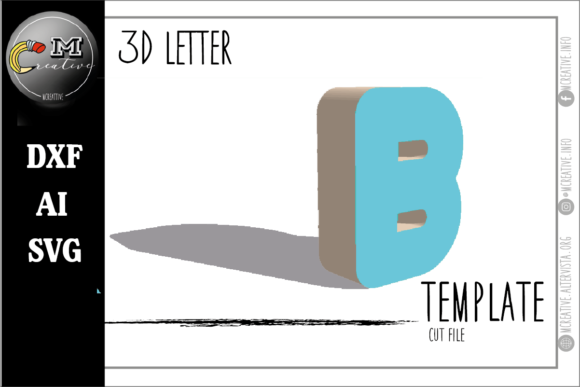
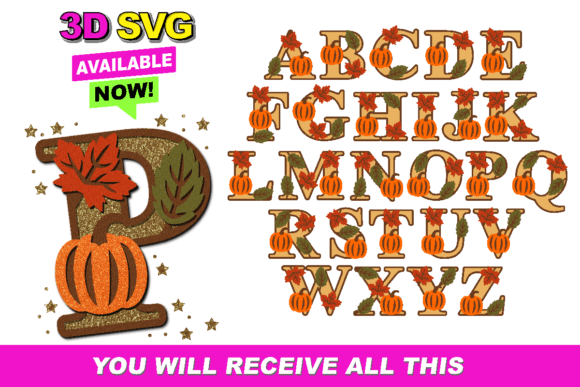
The moment you open the zipped folder containing the Alphabet 3D SVG Pumpkin, the intent is clear. This isn’t trying to be a hyper-realistic botanical illustration of a gourd. It is graphic, bold, and inherently playful. The "3D" aspect of the title suggests depth, likely achieved through layered cuts or strategic shading in the vector paths. For an embroiderer, this translates to a design that begs for dimensionality.
The mood it creates is undeniably seasonal but versatile. While pumpkin shapes scream autumn, the clean lines and potential for color blocking make it suitable for year-round use if the thread palette is adjusted. It feels like a handmade product that belongs in a boutique window rather than a mass-produced discount bin. There is a certain confidence in its silhouette. It doesn’t whisper; it announces. This is crucial for small business owners because the first impression of a physical item often dictates its perceived value. If the embroidery looks sloppy, the customer assumes the whole brand is sloppy. If the design has strong, clear geometry, even imperfect stitching can look intentional.
Real-World Application: From Screen to Stitch
Let’s talk about where this design actually shines. I recently had a client request a custom line of holiday gifts for their corporate team. They wanted something festive but not cliché. We looked at standard snowflakes and reindeer, but they wanted something warmer. That’s when I pulled up Alphabet 3D SVG Pumpkin.
We decided to use it as the foundation for a custom apparel project—specifically, heavyweight sweatshirts for a late-autumn retreat. Because the file is a Shapes category item, it offers excellent flexibility. I treated the main pumpkin body as an applique piece. By using a contrasting fabric for the pumpkin against a dark charcoal sweatshirt, the "3D" effect was enhanced by the physical layering of materials before any stitching occurred. The result was a sophisticated, textured look that felt expensive.
This approach works equally well for baby embroidery. Imagine a onesie with a tiny, soft-fabric pumpkin applique, stitched down with a fine satin stitch border. The clean edges of the SVG ensure that the cut fabric is precise, reducing fraying and making the final finished product look polished. It also fits seamlessly into personalized gift concepts. Adding a single initial inside the curve of the pumpkin creates a balanced composition that is both functional (identifiable) and decorative.
For Etsy sellers and craft business owners, this design is a goldmine for printable mockups. Even if you aren’t selling the physical embroidery, having a high-quality visual representation of how this shape interacts with different fabrics allows you to create compelling listings. The geometric simplicity means it photographs well, translating easily into digital marketing assets.
Where to Exercise Caution
No design is universally perfect, and Alphabet 3D SVG Pumpkin has specific constraints that every embroiderer must respect. My primary concern lies with scale. Because the design relies on distinct shapes to convey its character, shrinking it down too small can cause details to disappear. If you attempt to digitize this for a small hoop size—say, under 4x4 inches—you risk losing the definition that makes the design appealing. The letters, if included, may become illegible, and the pumpkin contours might merge into a single dark mass.
Fabric choice is another critical variable. This design performs best on stable, medium-to-heavy weight fabrics. Attempting to stitch this on thin, stretchy knits without proper stabilization will lead to distortion. The curves of the pumpkin are unforgiving; if the fabric stretches during hooping, the symmetry breaks. Similarly, highly textured fabrics like bouclé wool or thick terry cloth can obscure the fine details of the design. In these cases, the contrast between the thread and the fabric texture becomes muddy, reducing the visual impact.
I also advise caution when using this on curved surfaces like caps or hats. While possible, the curvature can distort the intended proportions of the pumpkin unless you are using a specialized cap frame and adjusting the digitization accordingly. For beginners, sticking to flat surfaces like tote bag design projects or pillow covers is a safer bet to ensure professional results.
Technical Notes for the Practical Designer
Before you commit to a large production run, there are several practical steps you should take. First, always test the design on scrap fabric. This is non-negotiable. You need to evaluate the stitch density and ensure that the thread tension is correct for your specific machine and thread type. If the design uses fill stitches, check for puckering. If it uses satin stitches, inspect the edges for fuzziness.
Thread color selection is paramount. The "3D" effect often relies on contrast. Using tonal threads (e.g., orange pumpkin on an orange background) will flatten the image. Opt for complementary colors to enhance depth. Additionally, consider the stabilizer you are using. A tear-away stabilizer might not provide enough support for dense areas, while a cut-away might be necessary for garments that require frequent washing.
It is also vital to review the licensing terms provided with the download. The description notes that the file is easy to cut on Silhouette Studio and Cricut Design Space, but it explicitly warns users of other machines to ensure compatibility. As a designer, I assume this implies that if you are converting this SVG into an embroidery format, you are responsible for ensuring the conversion maintains the integrity of the original design. Furthermore, confirm whether you have commercial rights to sell finished items made from this design. Many digital assets allow personal use only, and violating these terms can have serious legal consequences for your small shop product business.
Final Verdict
Alphabet 3D SVG Pumpkin is more than just a seasonal clipart. It is a versatile design asset that, when approached with technical care, can elevate a wide range of embroidery project outcomes. It appeals to the desire for handmade authenticity while providing the clean structure that modern consumers expect. Whether you are creating holiday embroidery gifts, updating your brand consistency with new merchandise, or simply exploring new techniques in applique, this file offers a solid foundation.
Just remember: the tool is only as good as the hand that wields it. Test thoroughly, choose your fabrics wisely, and respect the limits of your equipment. When done right, the result is a commercial embroidery piece that stands out in a crowded market, proving that sometimes, the simplest shapes tell the strongest stories.