3D Christmas Tree Decorations: 3D SVG Review
As a graphic designer who spends most of my week juggling brand identities, packaging layouts, and social media campaigns for small businesses, I am constantly hunting for assets that strike the right balance between festive cheer and professional polish. When a client approaches me with a request for holiday marketing visuals—whether it is for a boutique candle line, a handmade jewelry shop, or a local bakery’s seasonal menu—the pressure is always on to deliver something that feels modern yet deeply traditional. This is where evaluating digital design assets becomes critical. It is not just about finding pretty pictures; it is about sourcing reliable graphic design asset libraries that can withstand the rigors of commercial use.
I recently reviewed the 3D Christmas Tree Decorations by 3D Studio Elephant to determine if they would be suitable for a real-world client project involving a premium gift box launch. The goal was to create a cohesive visual mood that felt luxurious and intricate without appearing cluttered or cheap. Here is my practical assessment of how these files perform in a professional design workflow.
First Impressions and Visual Mood
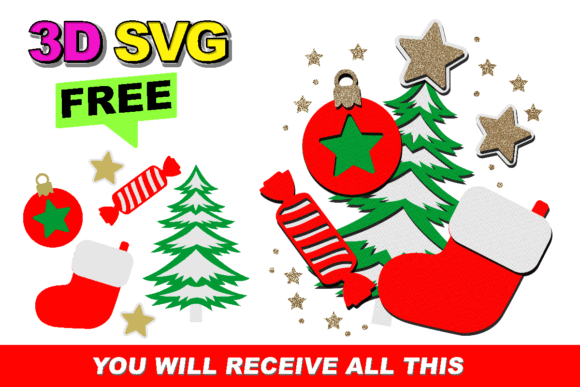
The immediate impression of the 3D Christmas Tree Decorations cut files is one of depth and texture. Unlike flat vector illustrations that can sometimes feel sterile, these designs leverage shading and layering techniques inherent to their 3D SVG format to create a sense of dimensionality. They evoke a nostalgic, tactile feeling, reminiscent of hand-blown glass ornaments or intricately carved wooden baubles found in high-end department stores.
This aesthetic naturally fits projects aiming for a "modern design" approach to holiday branding. It avoids the overly cartoonish style often associated with generic clipart, making it far more appropriate for small business branding that wants to maintain a sophisticated tone. For a client selling artisanal goods, this level of detail signals quality before the customer even reads the product description. The intricate nature of the decorations suggests that this asset belongs in the realm of creative design rather than quick-and-dirty templates.
Performance in Real Design Situations
In my experience, the versatility of a design asset is tested when applied across various mediums. Here is how these decorations hold up in specific scenarios:
- Packaging Design: This is arguably the strongest use case. When placed on matte black or deep emerald green paper stock, the 3D Christmas Tree Decorations pop beautifully. They work exceptionally well as corner accents or central focal points on gift tags and boxes, elevating the perceived value of the product.
- Social Media Graphics: For Instagram posts and Pinterest pins, these assets provide instant visual interest. In a crowded feed, the three-dimensional effect catches the eye. They are ideal for creating marketing visuals that need to stop the scroll, especially when paired with clean typography.
- Print-on-Demand Products: Whether designing for t-shirts, mugs, or tote bags, these files offer enough detail to look good at medium resolutions. However, care must be taken with color separation if using sublimation printing.
- Cricut Projects and Sticker Designs: For crafters and Etsy product sellers, the precision of the cut lines is vital. These files are structured to allow for clean cutting, making them perfect for vinyl decals, window clings, and layered sticker sheets.
The asset also translates well into editorial design contexts, such as holiday cards or magazine inserts, where space allows for larger, more detailed illustrations. It supports a narrative of craftsmanship and attention to detail, which resonates strongly with audiences looking for handmade business authenticity.
Where the Asset Works Best
To get the most out of these design assets, you should leverage them in areas where visual hierarchy allows for complexity. Large layout areas are ideal, as they give the intricate details room to breathe. Using them as hero graphics on a website’s landing page or as the main visual element in a flyer ensures that the viewer appreciates the nuance of the design.
They are also highly effective as decorative accents within brand identity systems. Imagine a consistent pattern made from these 3D ornaments used as a background texture for email newsletters or a subtle watermark on invoices. In product mockups, placing a single ornament next to a bottle or jar adds context and seasonal relevance without overwhelming the primary subject. For campaign visuals, grouping multiple elements can create a rich, immersive scene that drives emotional appeal and audience engagement.
Areas Requiring Careful Application
No asset is universally perfect, and there are distinct limitations to keep in mind. These decorations should be used carefully in small sizes. When scaled down too much, the intricate details can blur together, resulting in a muddy appearance that loses its impact. Similarly, in crowded layouts where text density is high, adding complex 3D elements can disrupt the flow of information.
Low-contrast designs are another risk area. If you place dark-colored ornaments on a dark background, or light ones on white, the 3D effect may vanish entirely. Minimalist branding projects that rely on stark simplicity might find these assets too ornate, potentially clashing with a strict visual hierarchy. Furthermore, in professional corporate materials where understated elegance is preferred, these decorations might lean too heavily into "festive," requiring careful integration to avoid looking out of place.
Practical Designer Notes for Commercial Use
Before integrating these files into a client project, several technical checks are non-negotiable. First, always test the asset in black and white. This helps verify that the shapes remain distinct and readable even without the benefit of color contrast. Check the contrast on both light and dark backgrounds to ensure visibility and legibility.
Preview the design at various sizes, from large web banners to tiny mobile icons, to identify any resolution issues. Place the elements on real product mockups to see how they interact with shadows and lighting. If you plan to print, review the file formats closely; while SVG design files offer scalability, ensure the paths are clean and optimized to prevent printing errors. Inspect any included PNG design versions for transparency quality, ensuring no jagged edges appear around the curves.
It is also wise to compare the visual weight of these decorations against different font styles. They pair well with serif fonts for a classic look, sans serif fonts for a modern twist, and perhaps script fonts for a personal touch, but they may clash with busy handwritten or display fonts. Finally, and most importantly, confirm the commercial license terms. Ensure you have the right to use these digital product files for your client’s marketing materials, merchandise, and resale items. Understanding the scope of the commercial design rights protects both you and your client from potential legal issues.
In conclusion, the 3D Christmas Tree Decorations by 3D Studio Elephant are a robust addition to any designer’s toolkit. They offer the depth and detail necessary for high-quality creative marketplace content and professional client work. By applying them thoughtfully and respecting their technical constraints, designers can create stunning holiday campaigns that resonate with customers and drive sales.